

Home » Shop » Step 4 - Seal/Chink » Backer Rod
Back to products 

Bulk Loading Guns $119.99 – $167.99Price range: $119.99 through $167.99
Backer Rod
$6.99 – $299.99Price range: $6.99 through $299.99
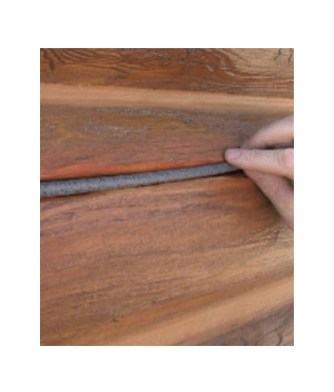
Backer Rod is a bond breaker used to make sure that your caulking makes a 2 point connection (to the top and bottom of the check). This is very important to allow the caulking to stretch. If you don’t use Backer Rod, it makes a 3 point connection and creates an anchor point where the caulking will tear when the logs move. It also prevents you from using too much caulking or chink and keeps your costs way down
View More Info
SKU: BR Categories: Backer Rod & Log Home Gasket Tape, Chinking & Sealants, Step 4 - Seal/Chink Tag: backer rod
Description
Details
Video
Documentation
Dimensions & Weight
Details
Backer Rod – Closed-Cell & Soft (Open-Cell) Foam Backer Rod for Log Homes, Timber & Concrete Joint Sealing
Professional-grade backer rod in every diameter from 1/4″ to 4″. We stock closed-cell backer rod year-round (firm, 100% waterproof, exterior-grade) and can special-order soft open-cell backer rod whenever you need it. Perfect for log home chinking and caulking, timber frame joints, concrete expansion joints, sidewalks, driveways, highways, and pool decks. Using the right backer rod saves you up to 40% on sealant while creating perfect, flexible, long-lasting joints that move without failing.
Closed-Cell vs Soft Open-Cell Backer Rod – When to Use Which
- Closed-Cell (in stock, #1 choice) – Completely waterproof, firm round profile, creates perfect hourglass sealant bead. Ideal for all exterior work, concrete joints, driveways, pool decks, and any wet-exposure area.
- Soft Open-Cell (special order) – Extremely compressible, grips rough/irregular surfaces, best for interior applications or where maximum compressibility is needed and moisture exposure is minimal.
- Both types create proper 2-point adhesion so sealant stretches instead of tearing
- Both save up to 40% on expensive chinking, caulking, or concrete sealant
- Both work with polyurethane, silicone, synthetic, and acrylic sealants
- Closed-cell meets or exceeds all ASTM standards for concrete expansion joints
Backer Rod Sizing Guide for Log Home Chinking, Caulking & Checks
- Chinking/caulking between round logs: Typically use backer rod about 40% of the joint width. Example: 1″ wide joint → 3/8″ backer rod (some pros go 1/2″). This creates the ideal sealant depth and hourglass shape.
- Checks (pie-shaped cracks): Use larger rod that can be squished and pushed deep into the taper so only ≈3/8″–1/2″ of caulking sits flush on top. Example: 1″ wide check opening → 5/8″ or 3/4″ backer rod (it compresses easily and seats perfectly).
- Concrete expansion/control joints: Choose backer rod 25–50% larger than joint width for snug compression fit (e.g., 1/2″ joint → 5/8″–3/4″ rod).
- Pro tip: Always test-fit – the rod should be snug but not forced; goal is 3/8″–1/2″ sealant depth on the surface for maximum movement capability.
Log builders, restoration contractors, and concrete crews across Canada have been buying our backer rod for years because it simply works better and lasts longer. Closed-cell always in stock from 1/4″ to 4″, soft open-cell by special order, shipped fast Canada-wide.
Trapezoid Backer Rod (Grip Strip Style) – The Premium Choice for Wide Chinking Joints
Trapezoid backer rod (commonly known as Grip Strip, Trap Rod, or trapezoid grip foam) is the premium closed-cell foam backing designed for wide chinking joints from 1″ to 6″+. Its trapezoidal shape grips the log surfaces and stays locked in place often without staples, glue, or nails — even in overhead joints, very wide gaps, or rough-hewn logs, or butt joints where round backer rod would fall out. Pros love it on almost every traditional-style chinking job because it creates a flat, firm surface for that classic thick mortar-look finish while ensuring perfect bond-breaker performance and decades-long durability.
Trapezoid Backer Rod vs Round Backer Rod – When Pros Choose Trapezoid
- Use trapezoid when joints are 1″+ (most crews switch at 1–1.5″ and larger)
- Use for traditional thick mortar-style chinking – gives the authentic old-world flat look round rod can’t match
- Use on round, hewn, or rough logs where round rod needs stapling
- Use in overhead, vertical, or butt joints that would sag with round rod
- Round backer rod is still excellent (and cheaper) for joints under 1″ or when budget is priority
- Works with all chinking materials and provides perfect bond breaker performance
Advantages of Trapezoid Backer Rod (Why Pros Swear By It on Wide Joints)
- Trapezoid shape locks in place – no staples, glue nails or staples (saves hours on big jobs)
- Provides flat, firm surface for smooth, professional chinking application and classic mortar look
- 100% closed-cell – completely waterproof, no moisture wicking
- Perfect bond breaker → proper 2-point adhesion = decades-long performance
- Saves 30–50%+ on chinking material in 3″–6″ joints
- Textured surface grips rough/hewn logs extremely well
- Easy to install – just squeeze in and trim flush
- Works with any chinking material
Disadvantages / Things to Know
- More expensive than round backer rod (but worth it on wide-joint jobs)
- Best on seasoned/dry logs – if logs are still shrinking heavily, stapled round rod can be more forgiving
- Available in fixed widths (1″, 1.5″, 2″, 2.5″, 3″, 4″, 6″)
- Not needed for joints under 1″ – round rod is sufficient there
Many professional chinking crews now use trapezoid backer rod (Grip Strip style) on wide-joint jobs because it simply works better, looks better, and saves time & material. If your logs have gaps over 1″, you may want to consider switching over from backer rod.
Frequently Asked Questions About Backer Rod
What exactly is backer rod and why do I need it?
It’s the foam cylinder you push into gaps before sealant. It creates proper depth, saves material, prevents failure, and lets sealant stretch with movement. Skip it and your joints will crack in a season or two.
Closed-cell vs open-cell – which should I use?
Use closed-cell for 95% of jobs (exterior, concrete, logs). Use open-cell only for interior or very irregular dry joints where maximum compressibility is needed.
How much sealant does backer rod save?
35–50% in most joints, often more in wide chinking. A 5-gal pail that covers ~100–120 ft without rod covers 350–400+ ft with proper backer rod.
Do I need to staple the backer rod?
Rarely with closed-cell under 1-1/4″ and almost never with trapezoid/Grip Strip. Properly sized rod stays put on its own.
Can backer rod be used in concrete expansion joints?
Yes – closed-cell is industry standard and meets ASTM D-5249 & C-1330.
Will it work with Perma-Chink, Energy Seal, Sashco, etc.?
100% compatible with every major brand.
What happens if I use the wrong size?
Too small → sealant sags & fails. Too large → thin skin that tears. Always test a piece first.
In stock sizes (closed-cell round): 1/4″ · 3/8″ · 1/2″ · 5/8″ · 3/4″ · 1″ · 1-1/4″ · 1-1/2″ · 2″ · 2-1/2″ · 3″ · 4″
Trapezoid/Grip Strip: 1″ · 1.5″ · 2″ · 2.5″ · 3″ · 4″ · 6″
Need open-cell or a size we don’t list? Call or email – we can get it fast.
Video
Documentation
Dimensions & Weight
1/4″
3/8″
1/2″
5/8″
3/4″
1″
1-1/4″
1-1/2″
2″


Additional information
| Weight | 20 lbs |
|---|---|
| Dimensions | 32 × 32 × 38 in |
Reviews (0)
Be the first to review “Backer Rod” Cancel reply
Shipping & Delivery
Reviews
There are no reviews yet.